

Learn to perform Natural frequency and modal analysis in Abaqus/CAE with this comprehensive bridge structure tutorial. This downloadable package contains a step-by-step PDF guide and ready-to-run model files to master vibration analysis techniques.
Master the essential skills for structural dynamics simulation by analyzing a steel bridge’s natural frequencies and mode shapes. Perfect for engineers working on seismic analysis, vibration assessment, and dynamic structural behavior.
This tutorial provides a comprehensive guide to performing Abaqus eigenfrequency analysis, teaching you the fundamental workflow for extracting natural frequencies and mode shapes. Whether you refer to it as Abaqus modal analysis, Abaqus vibration analysis, or Abaqus frequency analysis, this is the essential skill for predicting how structures behave under dynamic loads.

Package includes
- ✅ Step-by-step PDF tutorial (English)
- ✅ Complete bridge geometry setup
- ✅ Instructions for extracting eigenvalues and natural frequencies
- ✅ Practical tips for beam modeling and modal analysis
Perfect for civil engineers, structural analysts, and students learning dynamic finite element analysis and vibration modeling.
What you will learn
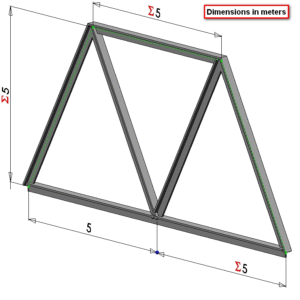
- Create 3D wireframe geometry for structural analysis
- Define steel material properties (E=207 GPa, ν=0.29, ρ=7800 kg/m³)
- Assign T-section beam profiles and orientations
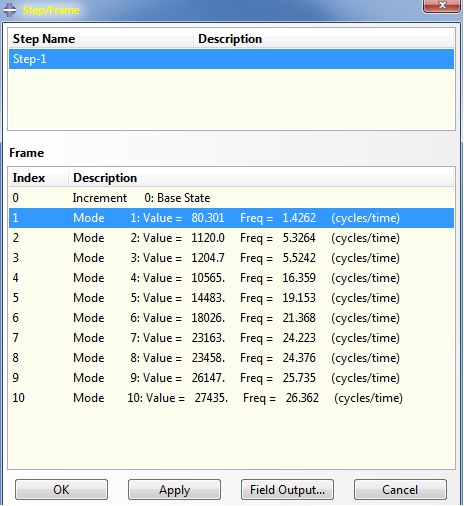
- Set up linear perturbation frequency analysis for first 10 modes
- Apply pinned and roller boundary conditions
- Mesh with B31 beam elements and render beam profiles
- Extract and animate mode shapes and natural frequencies
- Configure a Linear Perturbation step to perform an Abaqus eigenfrequency analysis and extract the first 10 modes.
- Understand the critical difference between a natural frequency analysis in Abaqus and a static analysis, and when to apply each
- Set up the model and boundary conditions correctly for a reliable Abaqus vibration analysis
See more T-Shaped Bridge Structure Beam Analysis
Tutorial overview
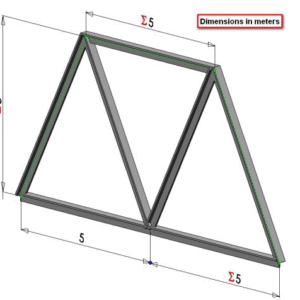
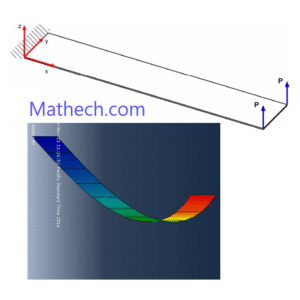
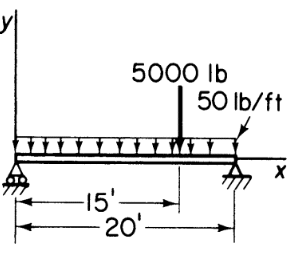
This tutorial guides you through a complete frequency analysis of a 2D bridge structure modeled in 3D to capture out-of-plane vibration modes. You’ll learn to create beam elements, assign cross-sections, set up frequency steps, and interpret modal results—revealing why 3D modeling is essential even for seemingly 2D structures.
A proper Abaqus eigenfrequency analysis is crucial for applications ranging from seismic design to machine vibration. This tutorial demystifies the process, guiding you through a practical example that reinforces the concepts of Abaqus modal analysis. You will learn why a seemingly 2D structure must be modeled in 3D to accurately capture all significant vibration modes, a key insight for any Abaqus vibration analysis
Who is this tutorial for?
- Civil and structural engineers analyzing bridge dynamics
- Mechanical engineers working on vibration and modal analysis
- Students learning structural dynamics and finite element methods
- Any Abaqus user moving from static to dynamic simulation
- Ideal for engineers and researchers who need to validate designs against resonance and dynamic loading through Abaqus vibration analysis.
Product details
- Format: PDF file
- Software: Abaqus/CAE
- Difficulty: Intermediate (Dynamic Analysis focus)
- Category: Structural Dynamics, Modal Analysis
- Author: Mathech – Abaqus Experts for Finite Element Simulation
Why this tutorial?
Understanding structural vibrations is critical for earthquake engineering, machinery design, and fatigue analysis. This tutorial provides hands-on experience with eigenfrequency extraction-a fundamental skill for any structural dynamics analyst.

Reviews
There are no reviews yet.