
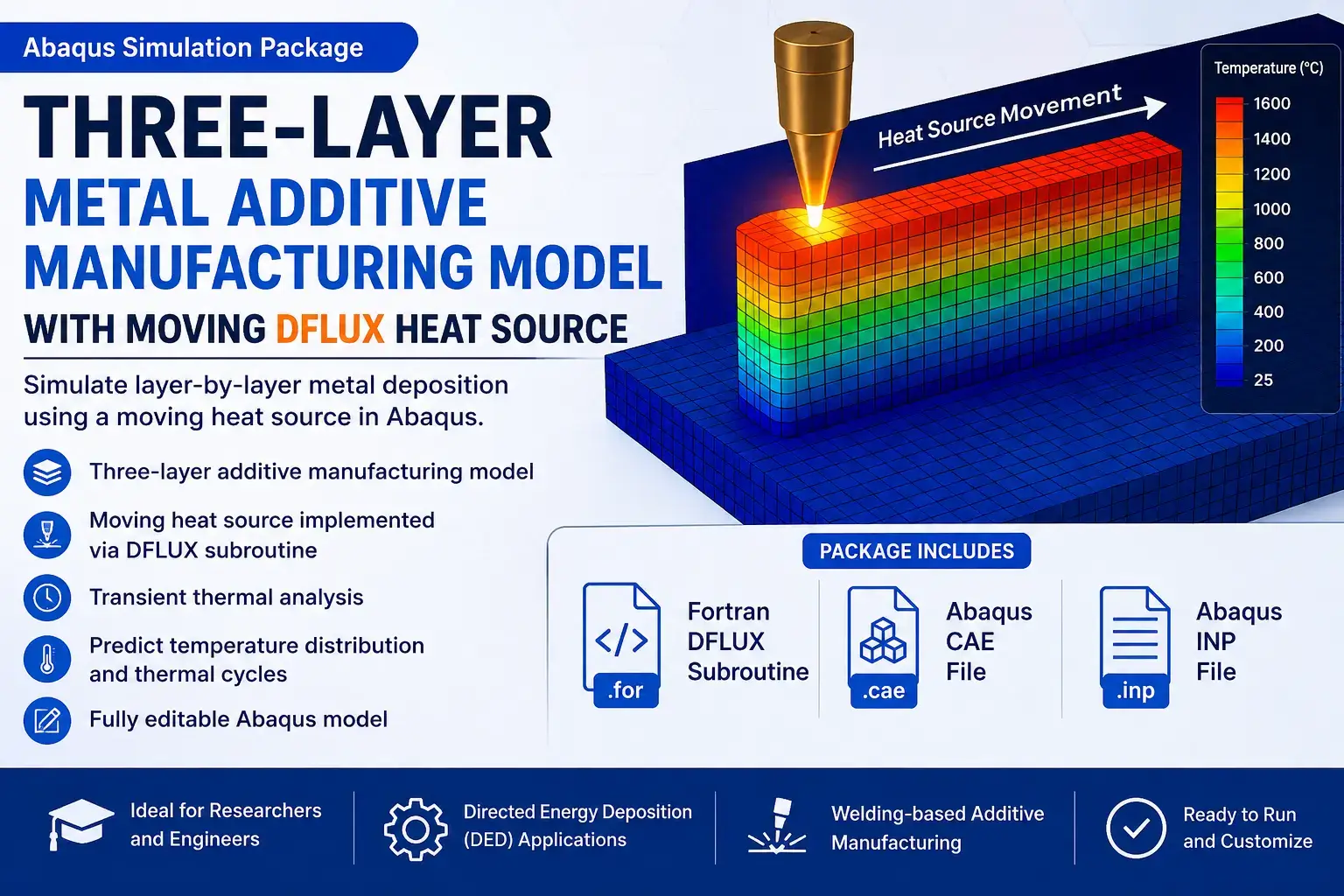
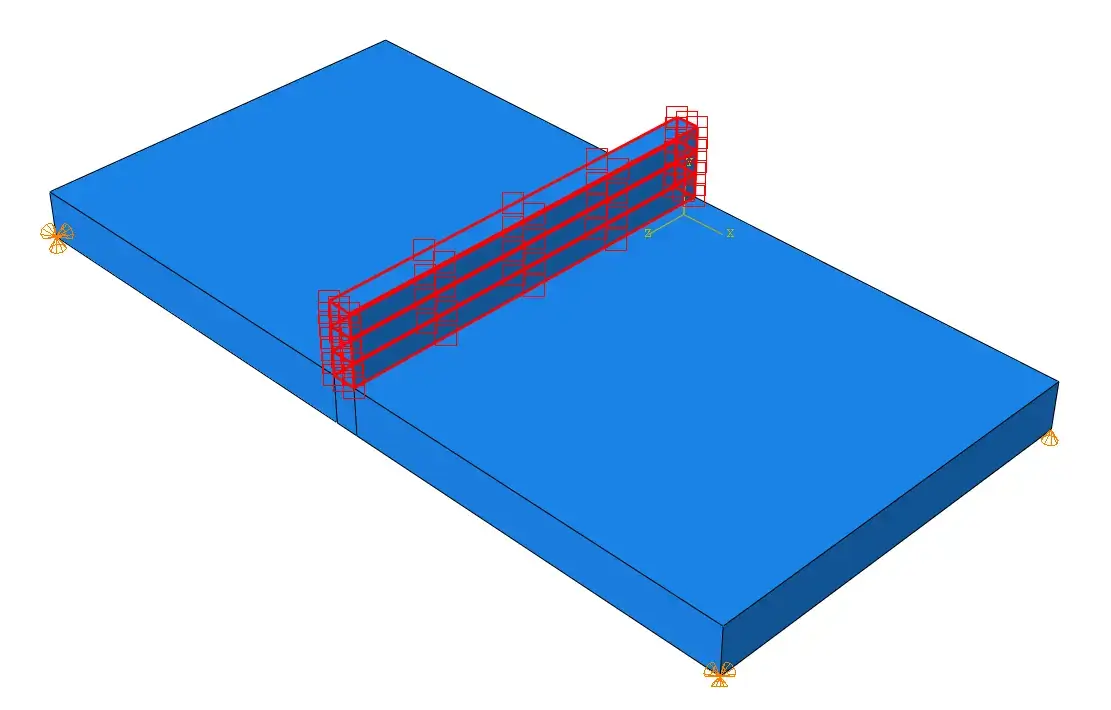
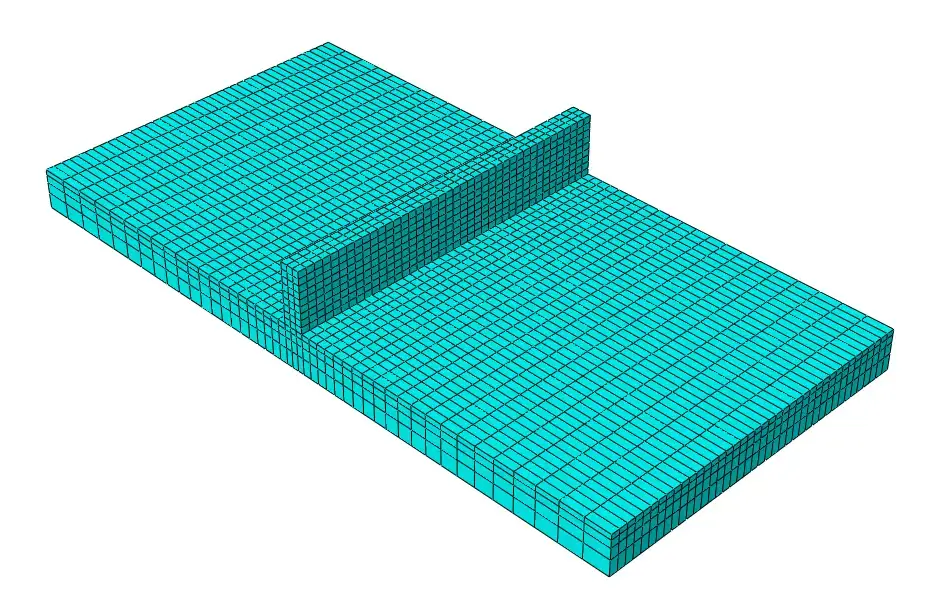
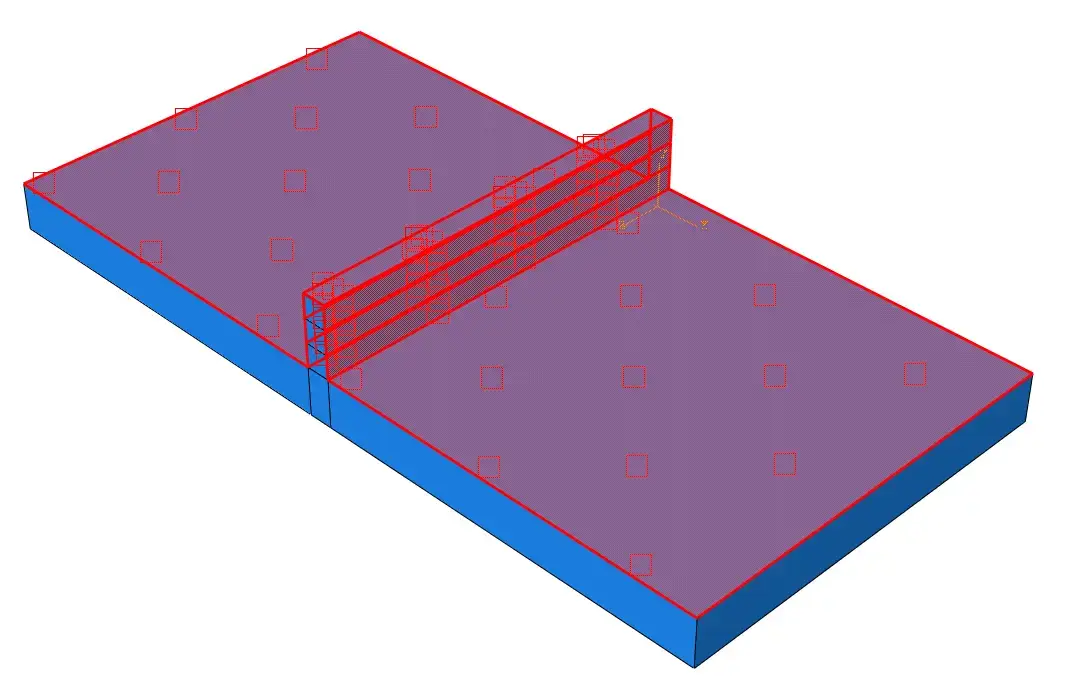

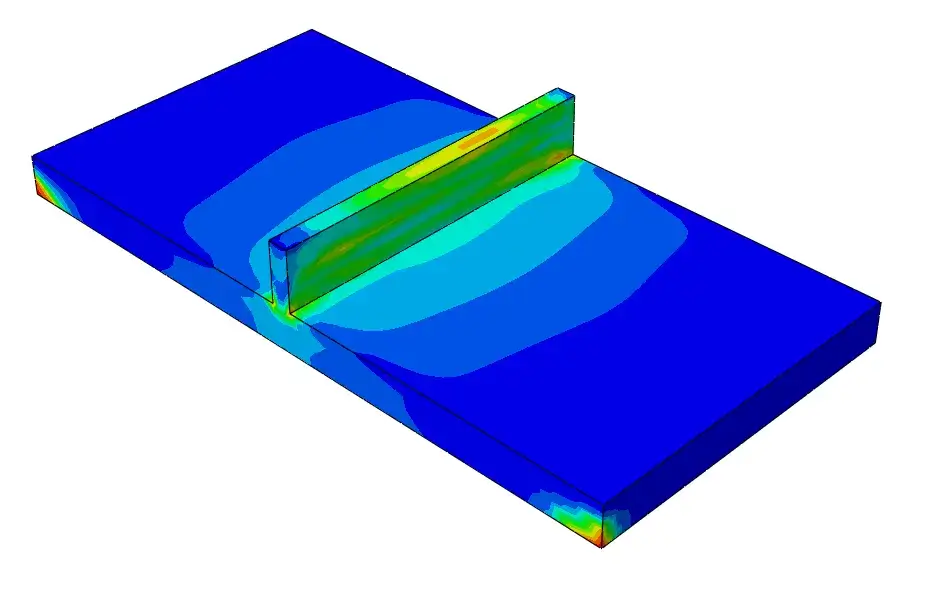


Simulate layer-by-layer metal additive manufacturing (AM) in Abaqus using a moving DFLUX heat source. This ready-to-use simulation package provides the essential Abaqus and Fortran files needed to study transient thermal behavior during the deposition of a three-layer metal wall.
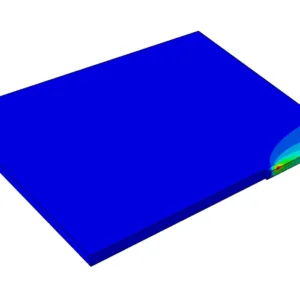
The model demonstrates how a moving heat source travels along the deposition path and applies heat to each layer during the build process. It is useful for researchers and engineers working on metal additive manufacturing, Directed Energy Deposition (DED), welding-based AM, and transient thermal FEA.
📦 Download Package Includes:
- ✅ Fortran DFLUX subroutine for the moving heat source
- ✅ Abaqus INP file for running and inspecting the analysis
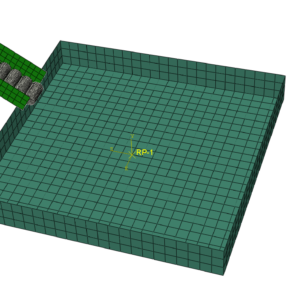
- ✅ Abaqus CAE file containing the complete simulation model
Perfect for students, researchers, and simulation engineers who want to practice real FEA workflows in Abaqus.
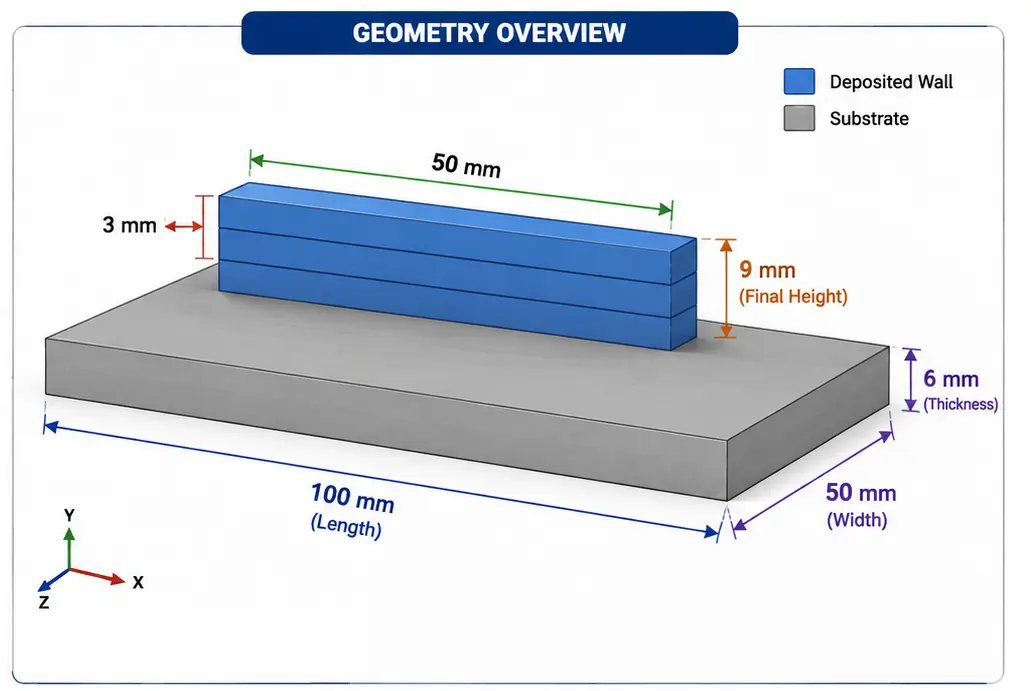
Key Features
- Three-layer metal additive manufacturing model
- Moving heat source implemented through the DFLUX subroutine
- Layer-by-layer deposition simulation
- Transient thermal analysis in Abaqus
- Defined heat-source trajectory
- Suitable for studying temperature distribution and thermal cycles during metal deposition
- Editable Abaqus model for further customization
Who Is This Package For?
This Abaqus simulation package is suitable for:
- Mechanical and manufacturing engineers
- FEA and Abaqus users
- Researchers studying metal additive manufacturing
- Graduate and PhD students
- Researchers developing DED and welding-based AM models
- Engineers learning how to implement moving heat sources with Fortran DFLUX
Why Choose This Package?
Implementing a moving heat source in Abaqus can be challenging, especially when the heat source must follow a predefined deposition path across multiple layers. This package provides a practical starting point for developing and modifying thermal additive manufacturing simulations in Abaqus.
Save Months of Development: Writing and debugging a moving heat source subroutine and a multi-layer CAE setup from scratch can take weeks. This package gives you a working baseline on day one.
Academic & Industrial Rigor: The subroutine syntax and element activation logic follow best practices and peer-reviewed methodologies, ensuring your simulation results are publication-ready.
Parametric-Ready: The Fortran code is heavily parameterized, allowing you to easily adjust laser power, scanning speed, hatch spacing, and layer thickness directly from the subroutine or via state variables.
Full Documentation: Every file is thoroughly commented. You will understand exactly how the heat source moves and how the time steps are calibrated to capture the sharp thermal spikes of the AM process.
You can use the included files to investigate temperature evolution, heat-source movement, thermal cycles, and layer-by-layer heating behavior.
Software: Abaqus + Fortran
Analysis Type: Transient Heat Transfer
Heat Source: Moving DFLUX
Model: Three-Layer Metal Additive Manufacturing
Files: .for, .cae, .inp



Reviews
There are no reviews yet.