
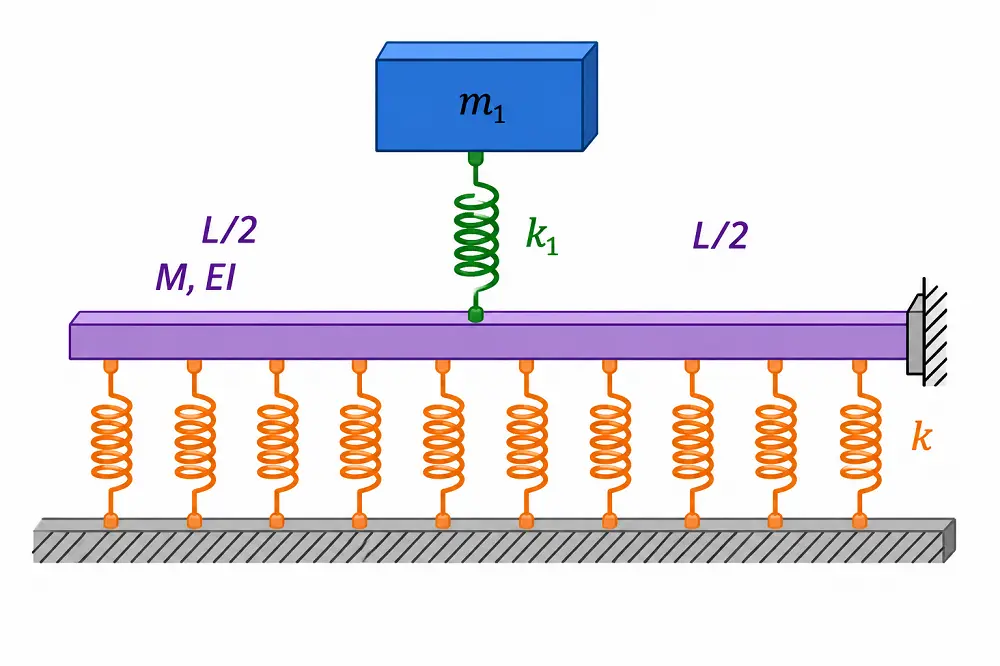
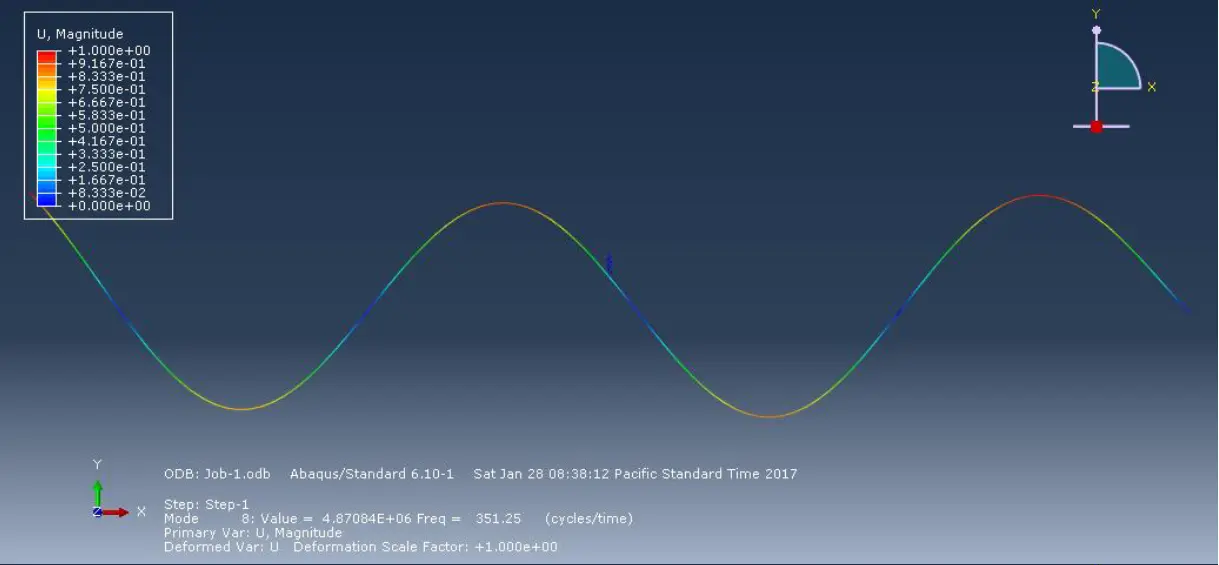
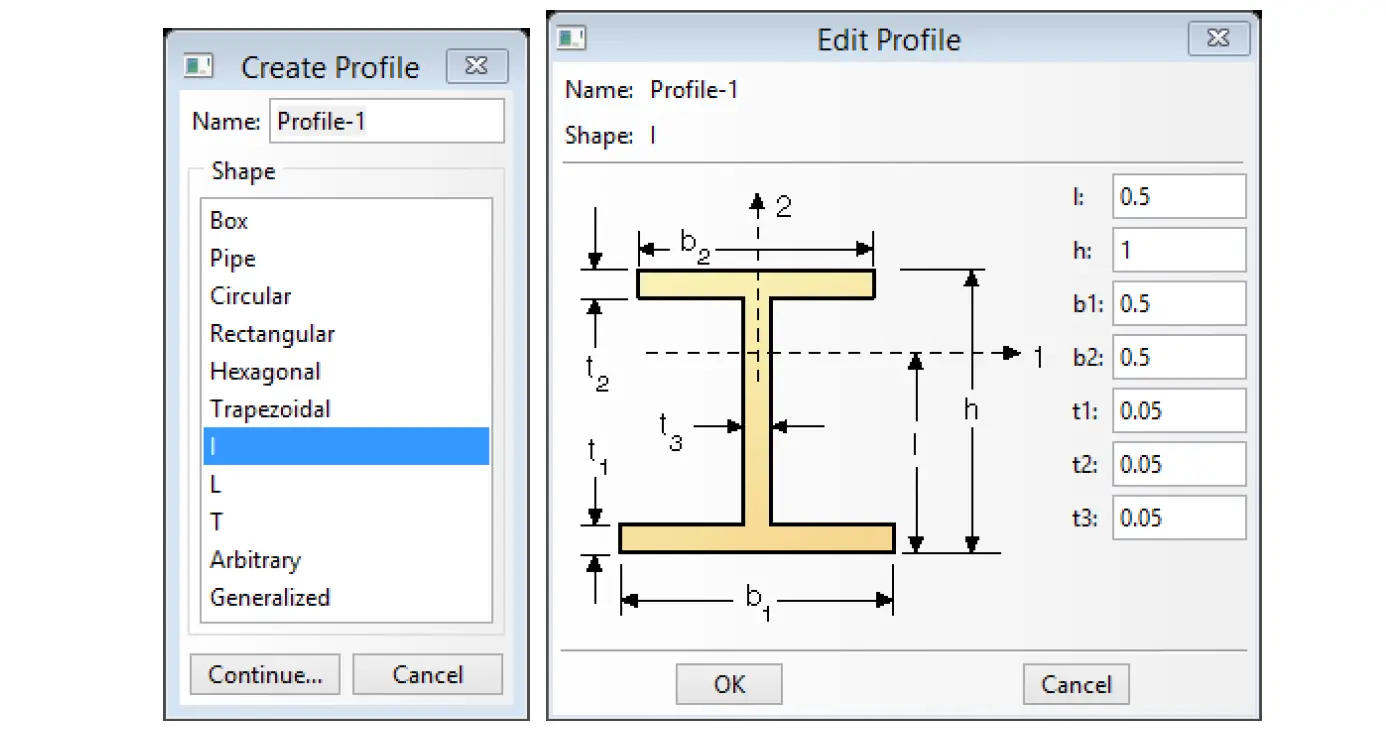
This Abaqus CAE file demonstrates the modal analysis of a flexible I-section beam using the finite element method. The objective of this simulation is to determine the natural frequencies and mode shapes of the beam, which are essential for vibration and dynamic design.
The beam is modeled as a three-dimensional structure with an I-shaped cross-section and a length of L. Abaqus extracts the vibration characteristics by solving the eigenvalue problem, allowing engineers to identify resonance frequencies and visualize the corresponding deformation patterns.
📦 Download Package Includes:
- ✅ Step-by-step PDF Tutorial – full explanation of modeling and simulation steps
- ✅ Abaqus CAE File (.cae) – ready-to-run model for the Modal Analysis of an I-Beam
Perfect for students, researchers, and simulation engineers who want to practice real FEM workflows in Abaqus.
This example is ideal for students, researchers, and FEA engineers who want to learn modal analysis techniques in Abaqus or use the model as a starting point for more advanced structural dynamics simulations.
Analysis Features
- 3D flexible I-beam model
- I-shaped beam cross-section
- Linear perturbation modal analysis
- Natural frequency extraction
- Mode shape visualization
- Finite element modeling in Abaqus/CAE
- Eigenvalue analysis
- Ready-to-run CAE model
What You Will Learn
- Create a 3D I-beam model in Abaqus.
- Define material and section properties.
- Apply appropriate boundary conditions.
- Set up a frequency extraction step.
- Calculate natural frequencies.
- Visualize vibration mode shapes.
- Interpret modal analysis results.
- Understand the dynamic behavior of beam structures.
This Abaqus model provides a practical example of structural vibration analysis and serves as an excellent learning resource for modal and dynamic simulations.




Reviews
There are no reviews yet.