
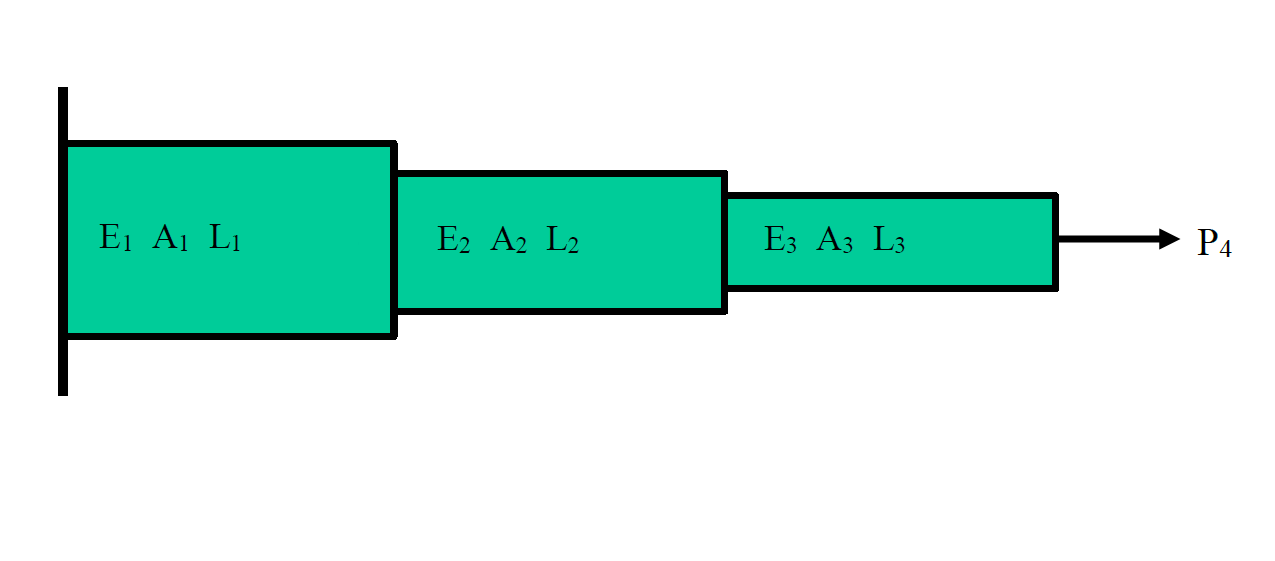
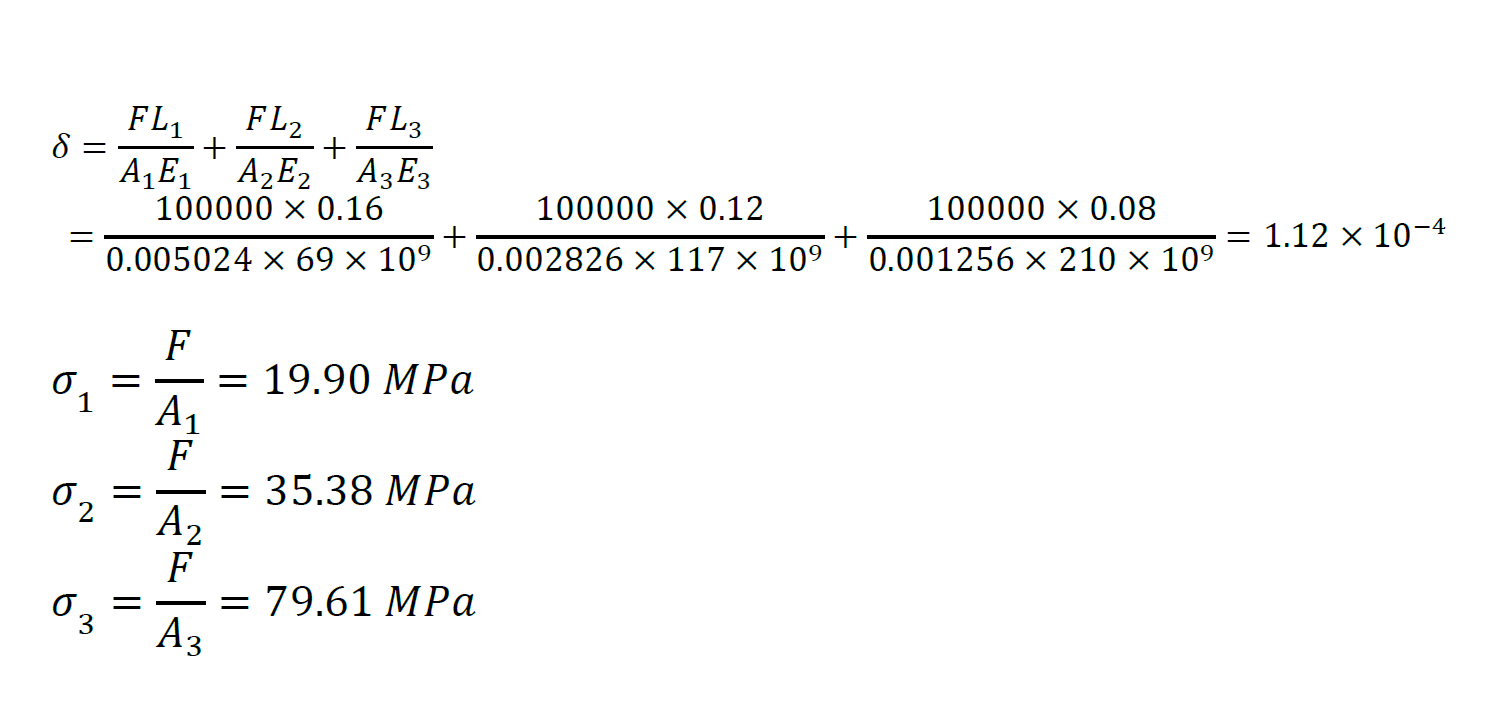
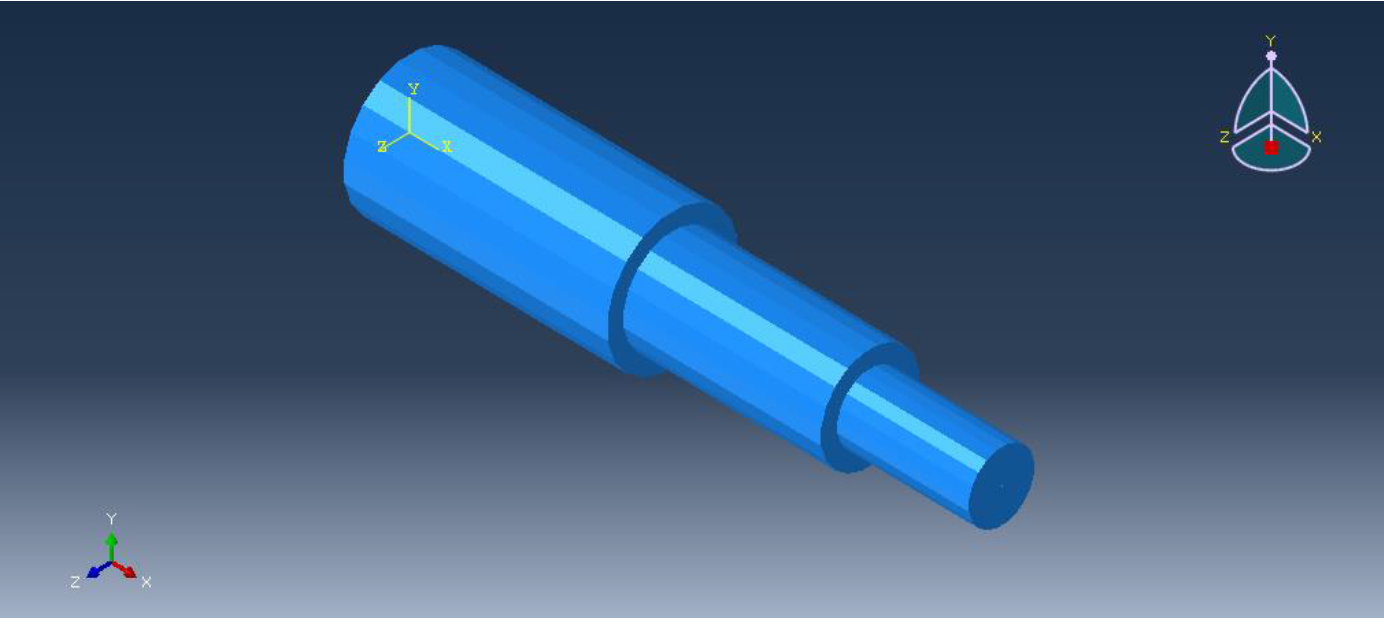
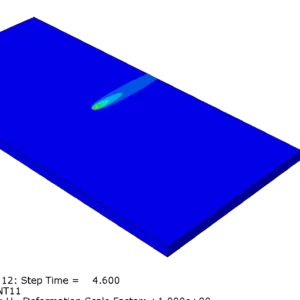
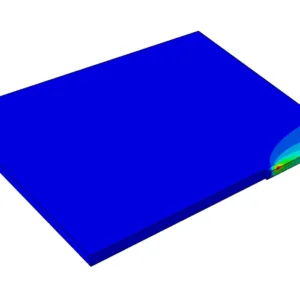
Perform a complete finite element analysis (FEA) of a stepped bar subjected to axial tensile loading using Abaqus/CAE 2022. This engineering example demonstrates how different cross-sectional areas and different material properties influence the stress distribution and total deformation of a stepped structural member.
The model compares the analytical solution from Strength of Materials with the numerical solution obtained from Abaqus, making it an excellent learning resource for engineering students, educators, and practicing FEA engineers.
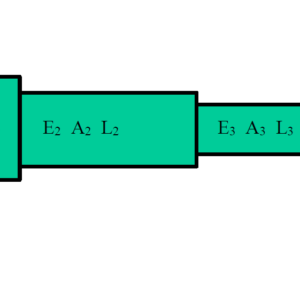
The stepped bar consists of three regions with different diameters and Young’s moduli. A tensile load of 180 kN is applied at one end while the opposite end is fixed. The tutorial explains how to evaluate axial stress and displacement throughout the structure and verify the finite element results.
📦 What’s Included in Your Download
- ✅ Abaqus CAE Model File (.cae)
- ✅ Abaqus Input File (.inp)
- ✅ Complete Geometry and Model Setup
- ✅ Material Properties Definition
- ✅ Boundary Conditions and Load Application
- ✅ Mesh Configuration
- ✅ Analysis Step and Job Configuration
- ✅ Post-Processing Instructions
- ✅ Stress Distribution Results
- ✅ Displacement (Deformation) Results
- ✅ Ready-to-Run Simulation Files
- ✅ Editable Files for Further Modification
| Parameter | Value |
|---|---|
| Analysis Type | Static Structural |
| Software | Abaqus/CAE 2022 |
| Geometry | Stepped Circular Bar |
| Loading | Axial Tensile Force |
| Applied Load | 180 kN |
| Materials | Multiple Linear Elastic Materials |
| Output | Stress & Displacement |
Engineering Problem
A stepped circular bar is subjected to a tensile force of 180 kN at one end.
The model contains three segments with different:
- Cross-sectional diameters
- Lengths
- Young’s modulus (different materials)
The objective is to determine:
- Total axial displacement
- Normal stress in each section
- Stress concentration due to geometry changes
- Comparison between analytical calculations and Abaqus results
Learning Objectives
By studying this Abaqus example, you will learn how to:
- Create stepped geometries in Abaqus
- Assign different material properties to multiple regions
- Define elastic materials
- Apply axial tensile loads
- Create appropriate boundary conditions
- Generate an efficient finite element mesh
- Run a static stress analysis
- Evaluate axial stress distribution
- Measure total displacement
- Compare finite element results with analytical calculations
Results Included
The completed analysis provides:
- Von Mises stress distribution
- Axial (normal) stress contours
- Total displacement
- Deformed shape
- Reaction forces
- Stress comparison between different sections
- Verification using analytical equations
Who Should Download This Model?
This engineering example is ideal for:
- Mechanical Engineering Students
- Civil Engineering Students
- Structural Engineers
- Finite Element Beginners
- Abaqus Learners
- Engineering Instructors
- Researchers performing validation studies
Why This Example Is Valuable
Understanding the behavior of stepped bars under tensile loading is one of the most fundamental topics in Mechanics of Materials and Finite Element Analysis. This example bridges theory and simulation by allowing users to directly compare hand calculations with Abaqus predictions, helping build confidence in both analytical methods and FEA modeling techniques.




Reviews
There are no reviews yet.