
Simulate the Cooling Stage of a Butt-Welded SUS304 Pipe in Abaqus
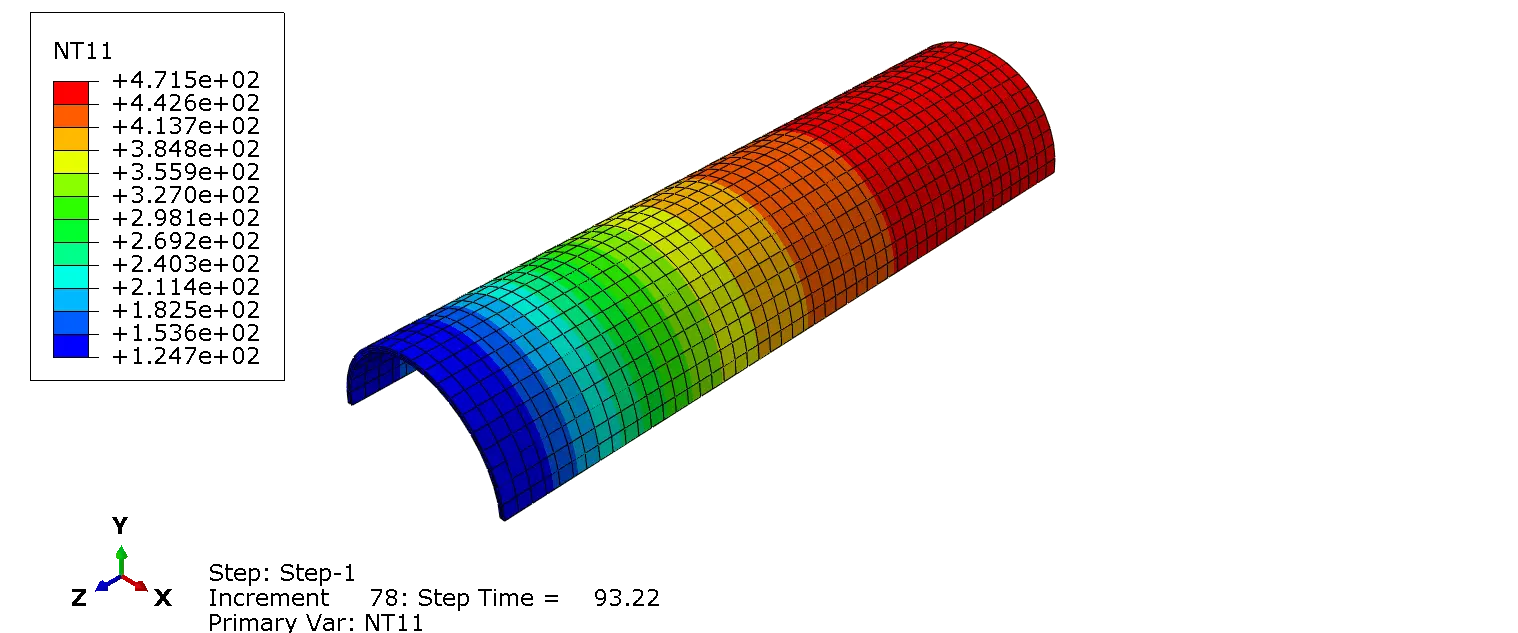
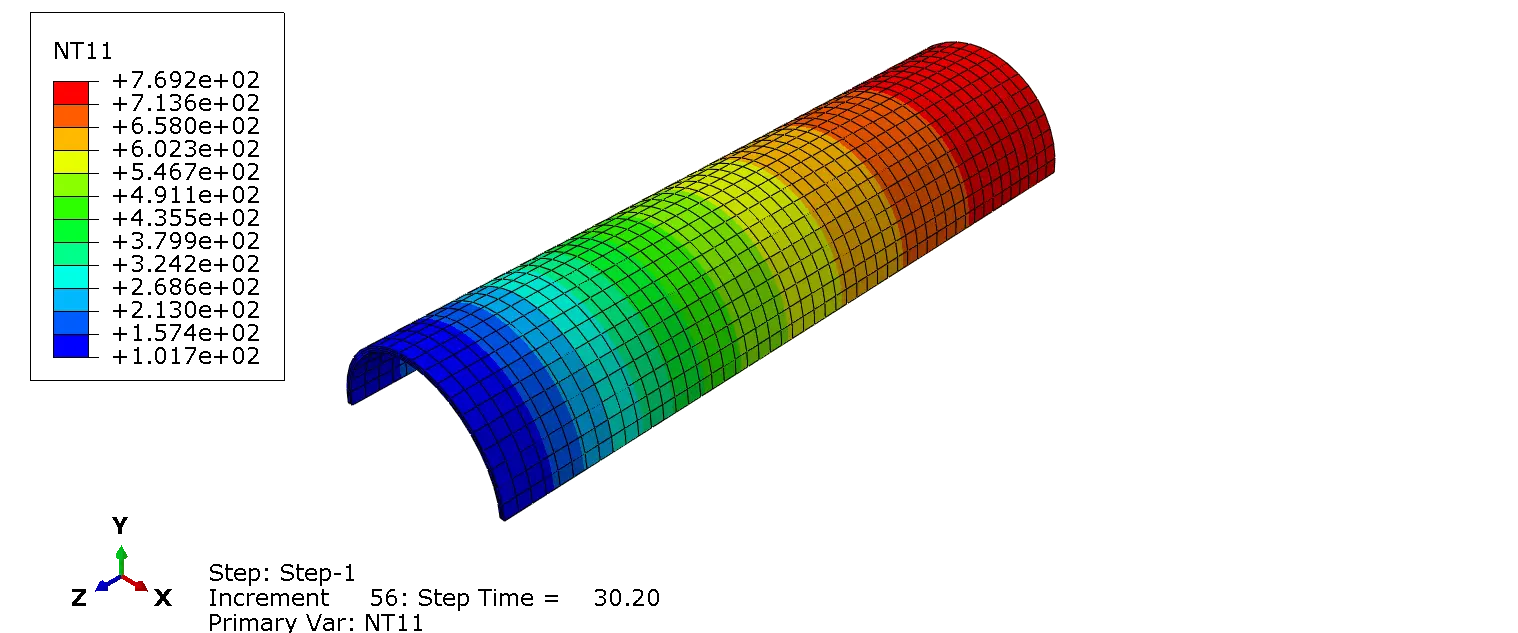
This engineering project demonstrates how to perform a transient heat transfer analysis of a butt-welded stainless steel (SUS304) pipe during the cooling stage following welding. The model combines temperature-dependent convection using a FILM user subroutine with thermal radiation using the Abaqus *SRADIATE interaction to produce a realistic cooling simulation.
The example is created for Abaqus 2022 and includes the complete project files required to study, modify, and run the analysis.
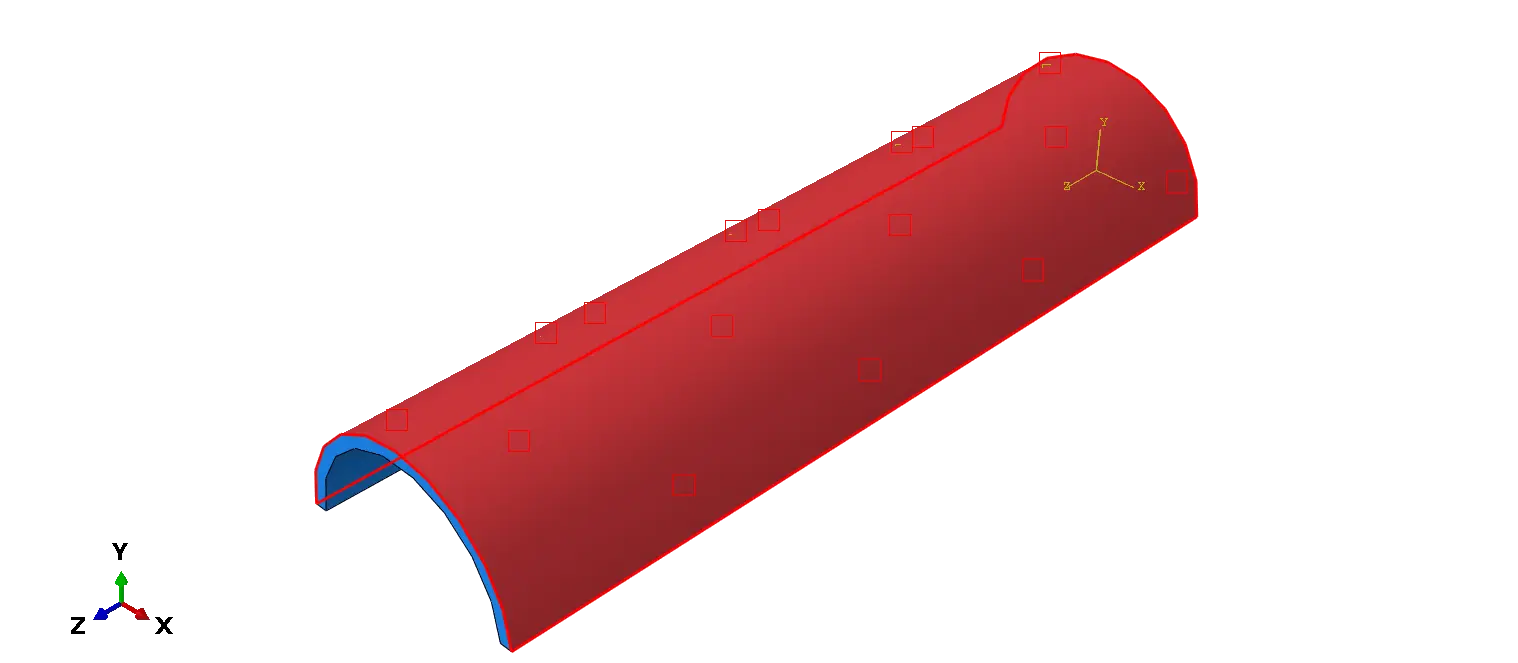
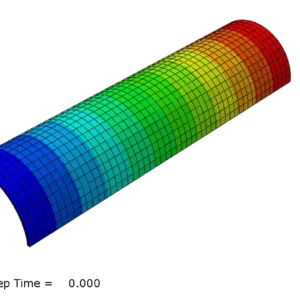
The pipe is modeled as a 180° quarter sector using 3D DC3D8 heat transfer elements, reducing computational cost while preserving the thermal behavior through symmetry.
Included Files
This download package includes:
- ✅ Abaqus CAE File (.cae)
- ✅ Abaqus Input File (.inp)
- ✅ Abaqus Python Script (.py)
- ✅ FILM User Subroutine (.for)
Model Specifications
- Software: Abaqus 2022
- Analysis Type: Transient Heat Transfer
- Material: SUS304 Stainless Steel
- Element Type: DC3D8
- Model Type: 3D Solid
- Geometry: 180° Quarter Pipe
- Outside Diameter: 114 mm
- Wall Thickness: 1.4 mm
- Pipe Length: 400 mm
- Pipe Axis: Z-direction
- Ambient Temperature: 25°C
Initial Temperature Distribution
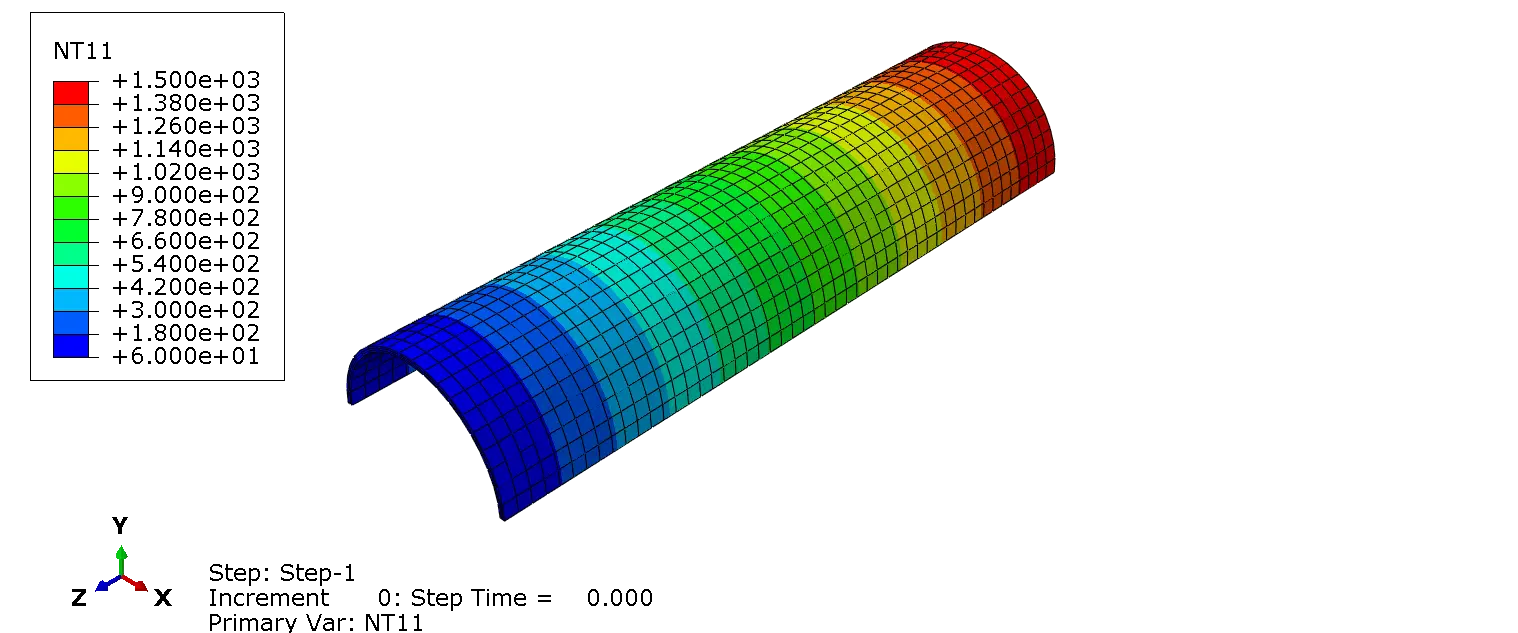
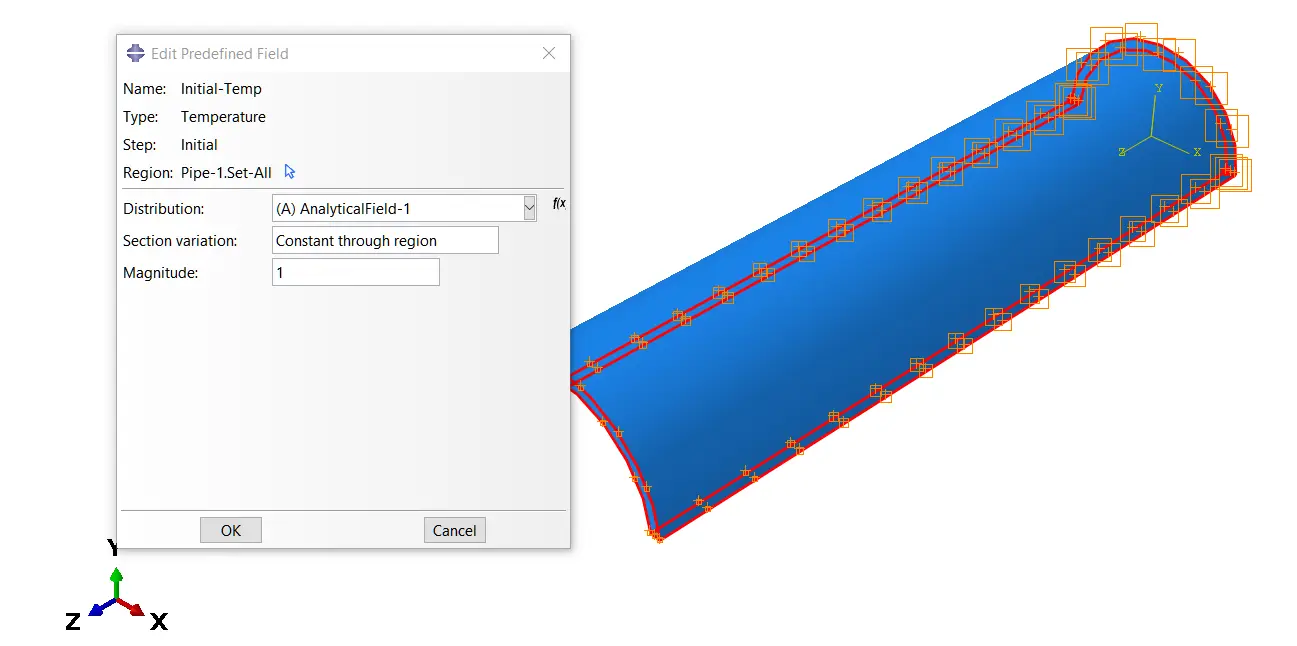
The project models the cooling process immediately after welding using a non-uniform initial temperature field.
The temperature along the pipe axis is defined as:
- 1500°C at the welded end (Z = 0 m)
- Decreases linearly along the pipe
- 50°C at the opposite end (Z = 0.4 m)
This temperature gradient closely represents the thermal condition after a welding pass and provides an excellent foundation for studying heat dissipation.
Heat Loss Mechanisms
The cooling process includes two important heat-transfer mechanisms:
Temperature-Dependent Convection
Convection is defined using the FILM user subroutine, allowing the convection coefficient to vary with temperature instead of remaining constant. This approach produces a more realistic prediction of cooling behavior.
Thermal Radiation
Surface radiation is modeled using Abaqus’ built-in *SRADIATE interaction with an ambient temperature of 25°C, accounting for radiative heat loss from the hot pipe surface.
The combination of convection and radiation provides a realistic representation of post-weld cooling.
Python Automation
The included Python script automatically creates the Abaqus model, including:
- Pipe geometry
- Material definition
- Thermal properties
- Initial temperature field
- Heat transfer step
- Convection interaction
- Radiation interaction
- Mesh generation
- Job creation
The script serves as an excellent learning resource for engineers interested in automating thermal simulations in Abaqus.
Applications
This project is suitable for a wide range of thermal engineering applications, including:
- Butt welding simulations
- Welding cooling analysis
- Stainless steel pipe welding
- Thermal stress preparation
- Welding procedure development
- Heat treatment studies
- Process optimization
- Engineering education and research
Learning Outcomes
By studying this project, you will learn how to:
- Perform transient heat transfer analysis in Abaqus
- Model cooling after welding
- Apply user-defined convection using the FILM subroutine
- Include thermal radiation using
*SRADIATE - Define non-uniform initial temperature fields
- Build thermal models using Abaqus Python scripting
- Create efficient quarter-symmetry thermal models
- Develop advanced welding heat transfer simulations
Why This Project?
The cooling stage has a significant influence on residual stresses, distortion, and the final mechanical properties of welded structures. Understanding heat dissipation is therefore essential for accurate welding simulations.
This project provides a practical example of combining Python scripting, FILM user subroutines, and thermal radiation in a single Abaqus model. It can also serve as a starting point for more advanced simulations that include moving heat sources, residual stress analysis, or thermo-mechanical coupling.
Whether you are learning Abaqus or developing custom welding simulations, this project offers a complete, ready-to-run workflow that can be adapted to your own engineering applications.



Reviews
There are no reviews yet.